


Every once in a while, a date on the calendar ambushes you.
For me, December 8 is that date. It is the day my double life as a pastor came crashing down, my moral failure became public, and the god I thought I was serving turned out to be much smaller and harsher than the God who is actually there.
Fifteen years later, I am no longer trying to be a “good pastor.” I am trying to be a human being who trusts that belovedness is more fundamental than brokenness.
This essay sits right at that fault line. It weaves together three scenes from this past week (a watch, a runaway dog, and a theology document) and traces how I moved from a shame-soaked religion to a mystical way of being that still tells the truth about harm, but refuses to weaponize it.
If you have ever looked at your own life and thought, “This is who I really am, and it ruins everything,” I wrote this for you.
Watch or Listen
The Whole Story
On December 8, I was not thinking about anniversaries. I was checking the time.
There was nothing special about the moment. No stained-glass light pouring through a sanctuary. No dramatic music. Just an ordinary day in an ordinary body, moving through the ordinary motions of getting things done.
Then my eyes slid past the numbers on my watch and landed on the date. December 8.
My stomach tightened before my mind caught up. Fifteen years. Fifteen years since the world as I knew it collapsed in on itself. Fifteen years since the bottom dropped out and the version of me I had worked so hard to curate was dragged into the light.
If you’ve been following We Can Stay Human or my story for any amount of time you know that I used to be a pastor. You also know that while serving doing as a pastor, I lived a double life. One was about being a faithful pastor and devoted family man, the other was a frantic attempt to cultivate some semblance of inner peace, no matter the cost.
But that Wednesday evening so many years ago, as my secretive moral failings became public, it revealed something deeper: my unfaithfulness was not just a private struggle. It was a choice to place my inner chaos above the people I claimed to love most. It exposed that while I postured devotion and integrity, I had been living in a divided way that made my family secondary to my hidden life. And the remembrance wrecked me all over again.
I did not choose to start this week in such a tender place. It started in a hallway, with a watch, and a date that refused to be neutral.
The air felt a little thinner. The light, a little harsher. I remembered not just what happened back then, but what it felt like in my body. That strange hum of adrenaline and shame. The way every room suddenly felt too small, as if the walls had learned things about me they were not supposed to know.
December 8 is not simply a square on the calendar. It is a doorway into a version of myself I would rather not see. It is the moment when the story I told about who I was finally snapped under the weight of who I actually was.
This year, the date did not just remind me of what I did. It reminded me of how I understood myself when it happened, and who I am becoming now.
It reminded me that I have not just shifted beliefs. I have shifted gods.
When your worst truth becomes public
The next day, December 9, 2025, I found myself sitting in that space again.
Not physically. Physically, I was just… here. Present-day me. Present-day life. Present-day room.
But internally, I was back in the moment when everything first went public. Back in the days when what I believed to be “the truth about me” had finally leaked out into the open. Back to December 9, 2010. Back to a chilly morning filled with impossible conversations.
That feeling is hard to explain if you have never been there. It is more than embarrassment. More than getting caught. It is the sensation that the very parts of you that you were most ashamed of, the ones you worked so hard to hide, are now common knowledge.
It is the sense that the story about you has been rewritten in one sentence: “This is who you really are.”
Back then, I lived inside a theology that told me I was fundamentally broken. Depraved. Sinful to the core. I preached it. I prayed it. I measured myself and everyone else by it. So when my failure became public, it did not just feel like something I had done. It felt like proof of who I had always been.
In that frame, moral failure is not a human fracture to be tended with honesty and repair. It is confirmation of your depravity. It is God catching you in the act and saying, “See? This is why I am angry. This is why judgment is justified.”
Sitting in the hollow on December 9, 2025, I could feel how deeply that old story still lives in my nervous system. Even as my theology has shifted, the old scripts still know how to find the volume knob on my shame.
But I am not the same man who walked out of pastor-world with that theology as his only language.
Fifteen years later, I move through the world with a very different conviction: that beneath every fracture, belovedness remains.
But the week did not stop with an anniversary, or even one life altering events. It kept offering scenes that had me thinking about then vs. now.
The dog, the chain, and the father I used to be
That evening, another small thing happened that opened a much larger door. And it all started with my kid’s dog escaping the yard … twice.
The first time I went out with the dog and left him off leash. I saw a fence railing that needed to get fixed and wanted to get it taken care of quickly. I assumed he would run around the yard, but wouldn’t leave it while I was watching. I was wrong.
Almost immediately he darted under the split rail fence into the neighbors yard. As I hopped the fence to retrieve him, he crossed their yard and went under another fence leaving only a small easement between him and a busy street.
That’s when he turned, looked back at me, and smiled. I don’t mean smile in the literal sense, but that physical posture where you can tell that if he were human, he would have been smiling. Me chasing him had become a game.
Eventually, I managed to retrieve him, but I was convinced not to make the same mistake again. So when he acted like he needed to go to the bathroom, I did the responsible thing. I put the dog on the chain. I made sure everything was clipped. I checked the way you check when you want to feel like you did your due diligence.
Then, in the way that dogs and life and attachments often do, it all came undone.
The chain yanked free. The collar popped off. At first, he just ran around the yard proud of himself. But as soon as I noticed he’d come undone and stepped onto the back porch, he stopped. He turned towards me and gave me that same playful look before bolting towards the fence.
Suddenly it was late-night scramble, calling a name of a black dog into the dark, that mix of irritation and fear that only comes when something you love is moving too fast away from you.
My heart rate quickened. I could feel the familiar tightness in my chest. Part compassion for a dog struggling with his own attachment issues, part anger at myself for not being more careful.
There was panic, too: the creeping dread that something horrible was going to happen and I’d have to tell my kid that the dog was gone. I messaged my kid, who was out on a date, worried I was about to ruin their evening with dog news.
And then the realizations started stacking: even if I found the dog, he’d bolt the moment he saw me. Even if I got close, there was no collar to grab. No way to hold on.
In those minutes, my body was doing what it had been trained to do for years: catastrophize, brace for impact, find someone to blame, and search for evidence that I was failing.
This is what the old nervous system theology does. It takes a moment of ordinary struggle and turns it into a referendum on your worth. It does not just notice the dog is loose. It declares that you are fundamentally unreliable, that harm is inevitable, and that love will be withdrawn the moment the truth comes out.
Thankfully, we got the dog back. No tragedy. No headline. But the next morning, as I sat in the quiet, the inner narrative started: I failed my kid. Not in some abstract theological sense. In a very ordinary, domestic way. I did not take proper care of the dog. I was supposed to be the adult, the responsible one, the safe one. Instead, the dog ended up running loose.
If you listen closely you can hear the echo: You failed your kid.
The sentence did not stay small for long. It rarely does. My mind began to gather evidence from past seasons, old patterns, earlier years.
Who I was when my kid was young. The choices I made. The ways my unhealed story leaked into parenting. The days I was preoccupied with some twisted mix of saving the world and trying to cope with my inner chaos while missing the world in my own home. In a few breaths, a dog slipping a chain became a portal into years of feeling like I had failed my family.
This is how the ghosts of our past selves usually arrive. Not with trumpets. With a dog, a chain, a small mistake that wakes up old scripts.
Sitting there, I could feel two versions of myself in the room. There was the old pastor version, the one who saw every failure as a fresh verdict and would have done anything in that moment to blame anyone for what happened.
I’d point fingers at the previous owners who’d traumatized the dog and then left him at a shelter. Or at my kid for having the dog on a collar that would be pulled apart. Or at whoever put the fence up leaving enough room between the ground and the first rail so a dog could slip under. Literally anyone to blame as a desperate attempt to unload some of the burden I was carrying, because that version of me believed that any misstep proved that God’s anger had all the evidence it needed.
And then there was the mystic I am becoming, who has learned to listen to these moments as invitations rather than indictments. It’s the me who recognizes that blame does not ease the burden, nor does being at fault have any connection to belovedness. When the dog slips the chain, the mystic does not ask, “What does this prove about me?” The mystic asks, “What is actually happening here, and what does this moment need?”
The mystic has learned that responsibility is not the same as carrying shame. That I can acknowledge my part in what went wrong without collapsing into the old narrative that I am fundamentally unreliable. That I can reach out to my kid and say, “I messed up, and I’m sorry,” without needing that apology to be followed by self-flagellation or a performance of penance.
Where the old pastor version would have turned this into evidence for a trial, the mystic turns it into an invitation to tend what is tender. To notice where the old scripts still live in my body. To practice a different response: one rooted not in fear of judgment, but in trust that love does not abandon us when we stumble.
The first voice says, “See, you are still the same guy who ruins everything.” The second voice says, “Look at how quickly your shame reaches for the microphone. Can we sit with the part of you that is afraid of failing your kid, without turning it into a sentence?”
The dog on the chain was not just about responsibility. It was about the father I was, the father I am, and the father I am still learning to become. And it pressed me into the question that had been humming beneath the whole week: Who am I now, and what story am I living inside?
Writing down what I believe now
As if that were not enough, while getting ready to produce this piece, I found myself doing something very tangible: building out a theology framework document.
On the surface, it looks like any other sort of planning work. Headings, bullets, definitions. A Google-doc-feeling kind of task, except I was doing it in Notion.
Under the surface, it was something else entirely. It was me putting into words what I actually believe now. Line by line, I was noticing how far I have moved from the religion that once defined me.
Where I once preached that God is fundamentally angry at our sin, I was writing that God is Love, fully and always. Not love as strategy or sentiment, but as essence. Not a God who occasionally chooses to love, but a God whose very being is relentless love.
The language I use now for what we call “sin” is not a criminal category. It is the naming of fracture, the ways we live out of alignment with love: for ourselves, for others, for the earth, for the Holy.
Back then, moral failure meant displeasing God and triggering divine judgment. Now, when I talk about fracture or misalignment, I mean not living in at-one-ment with Love. I mean moving against the grain of the universe, which is compassion.
And perhaps most harmful of all, the old theology said my fundamental nature was depravity. The best you could expect from me, left to my own devices, was lies, deception, and duplicity. But then God would forgive me because of Jesus. If you stop and think about it, it’s a move that dismisses any harm caused to another person. After all, what more could you expect from a poor miserable sinner?
So where I once understood myself as fundamentally depraved, I now find myself writing about fundamental belovedness.
Where Jesus once served as a divine loophole, the exception God made to tolerate us, I now embrace Jesus as the Human One. The embodied invitation into what it means to be fully human.
Where I once used words like salvation to describe an evacuation plan away from judgment, I now describe salvation as the gradual healing of fracture. Not escape from earth, but deeper presence within it.
It is one thing to feel these shifts in your bones. It is another to see them in writing and realize: I have changed gods.
The God I know today is not the one who presided over my downfall with crossed arms and a gavel. The God I move with now is relentless love, grieved by harm yet never reduced to vengeance.
The God I speak of today is the One I describe when I say “God is Love, fully and always.” Not love as mood, but love as the elemental fabric of reality. Salvation is no longer an escape hatch away from judgment, it is the slow healing of all the ways I have been out of tune with love. Grace is not the surprise twist at the end of the story. It is the operating system from the first page.
The greatest irony of all: I learned both while reading the Bible. Although, if you ask me today, it is impossible for both readings to be honest and accurate. The first began with me being taught, “This is what the text says,” and absorbing the broader themes of American evangelicalism. The second flowed from me asking the text, starting with the stories of Jesus, “What are you saying?”
The stories are the same: the same characters, events, places, and poems. But how I understand them now would make you think I had picked up an entirely different sacred text.
Sitting with this document I had prepared, I could feel the distance between who I was and who I am becoming. Not as an erasure of the past, but as a widening horizon.
In one week, three scenes:
the date on the watch,
the dog on the chain,
the theology on the page,
they all pointed toward the same revelation: My journey has not just been from one set of doctrines to another. It has been a shift from religion to mysticism. From a system obsessed with my fundamental brokenness to a way of being rooted in fundamental belovedness. From a God whose primary posture toward me was disappointment, to a Presence whose primary posture is embrace.
Maybe for you it is not a dog and a date. Maybe it is the way you still flinch when you miss a quiet time, or the way your chest tightens when someone calls you “faithful” because you remember all the ways you are not. Mysticism does not ask you to pretend those flinches are gone. It invites you to bring them into the light of belovedness and ask, “What if this fear is not proof that I am trash, but proof that I was trained to be afraid of my own humanity?”
Religion as base spirit, mysticism as the finer pour
One of the ways I have started to make sense of this shift is through distilled spirits.
Imagine a row of bottles: tequila, whiskey, rum. On the bottom shelf, you have the harsh versions. The ones you can drink if you have to, but they burn going down. They get the job done, if the job is numbing or proving something, but you are mostly bracing yourself for impact.
As you move up the shelves, something happens. The tequila is still tequila. The whiskey is still whiskey. The rum is still rum. Each has its own base, its own origin, its own distinct story. But the finer the spirit, the more complexity you taste. There is nuance. Character. Layers.
If you slow down enough to really taste, something surprising becomes clear: The top-shelf tequila has more in common with the top-shelf whiskey than either of them has with their own bottom-shelf versions. The harshness has been refined. The burn is still there, but it is not the point. It is part of a larger symphony.
The base versions are easy to get. They are cheap. They are loud. They promise a lot in a small amount of time. They also leave you with a headache and a hangover. The finer versions take time. Patience. Attention. You cannot rush them.
For me, religion has come to feel like the base spirit. Mysticism feels like the finer pour.
Religion, in the way I inherited it, started with my depravity and built from there. It was obsessed with who’s in and who’s out, who’s right and who’s wrong, who’s pure and who’s contaminated. It offered certainty and belonging at the cost of my own humanity.
Mysticism rises up from the same raw materials: our sacred texts, our traditions, and our stories about God. But it has been aged in the barrels of silence, suffering, contemplation, and encounter. It has been tested in deserts, not just classrooms. It does not throw away form. It deepens it.
When I listen to the mystics of different traditions, be it the Christian contemplatives, the Sufi poets, the Buddhist monks, or the Jewish Kabbalists, I hear that same pattern. Each one is still profoundly rooted in their own stream. The flavors are distinct. And yet, their deepest experiences of union, compassion, and presence have more in common with each other than with the rigid, fear-based versions of their own religions.
The more refined the spirit, the more it knows how to unite. The more refined the spirituality, the more it knows how to say: We are made for love. We belong to one another. We are more than our worst day.
This does not mean mysticism is soft on harm. If anything, it is more honest about it. Because when Love is the starting point, fracture matters more, not less. Harm is not just “breaking the rules.” It is violating the very fabric of what is real.
So when I look back at my failures, mysticism does not invite me to minimize it. It invites me to tell the truth about it, to own the damage, to seek repair where possible, and to remember that even there, belovedness has not given up on me.
Religion handed me a God who was preparing a verdict. Mysticism introduces me to a Presence who sits with me in the wreckage and says, “We are not done yet.”
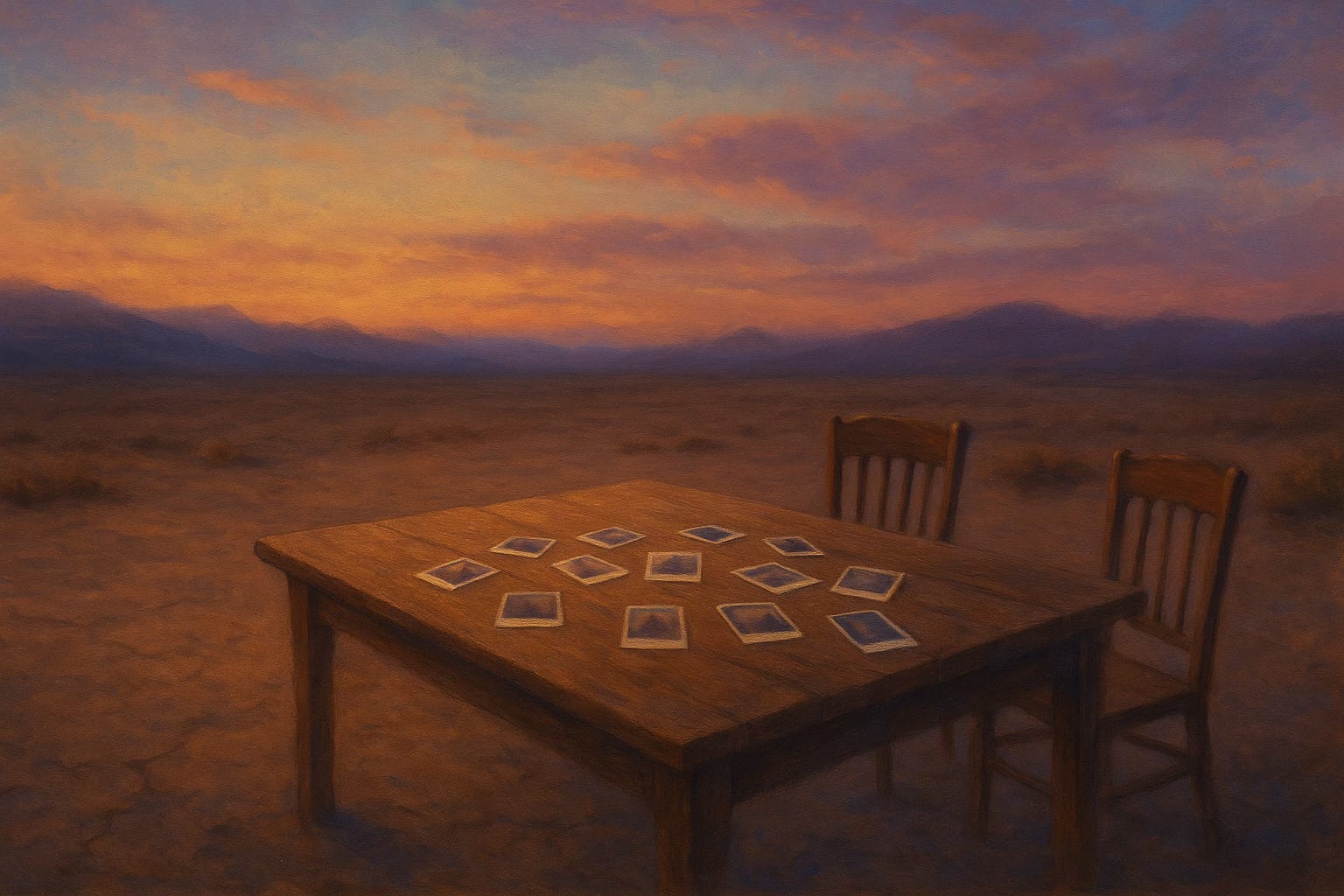
Desert and table
Fifteen years ago, when everything collapsed, it felt like a desert. The desert is where all the illusions burn off.
In the desert, your strategies do not work. Your reputation does not matter. Your clever sermons and spiritual credentials do not impress the sand. The desert is where you discover that the God who loved your performance is gone, because that god was never real.
What is left is the question: is there a Love that can meet me here, when I am no longer useful, successful, or impressive?
For a long time, I lived in that desert without a clear sense of where I was going. Religion had given me a map that no longer worked. Mysticism did not hand me a new map. It taught me to listen to the terrain. To the ache in my chest when I held my kid and wondered what kind of father I was becoming. To the quiet whisper in my nervous system that said, “You cannot keep living from fundamental brokenness and call it the gospel.” To the way my heart lit up when I encountered voices who spoke of God as relentless love, not retributive anger.
Over time, the desert started to reveal something I had not expected: a table. Not a grand banquet to show off how far I had come. A simple table, set in the middle of my ordinary life.
At that table, the ghosts of my past selves still show up. The pastor who manipulated shame and pitched Jesus an escape route. The man whose failure wounded people he loved. The father who missed things he wishes he could go back and redo. They all have a seat.
So do the people I have hurt. They are not props in my redemption story. They are human beings whose pain I have to reckon with.
At this table, mysticism does not ask me to pretend it all “worked out for the best.” It does not offer cheap closure. Instead, it invites me into a different kind of at-one-ment:
To be at one with the truth of what happened, without spin.
To be at one with my own belovedness, without denial.
To be at one with the call to repair, as much as it is possible.
This is the movement from religion to mysticism in my actual life. Not a new set of doctrines to sign. A new way of sitting at the table with myself, with others, with God. A way that insists: your past matters, but it does not get the last word. Your ghosts are real, but they do not get to drive. Your humanity is not the problem. It is the place where Love keeps wanting to meet you.
When the date comes back again
December 8 will roll around next year. The ghosts will not vanish. The dog will get loose again, in one form or another. There will be days when the old god tries to climb back onto the throne of your imagination. On those days, I picture the table in the desert.
I see pastor-me, mystic-me, my kid, my kid’s dog, the people I have hurt, the people who have hurt me, all sitting there together. Not in cheap reconciliation. In honest presence.
I imagine the Holy there too, not at the head of the table with a ledger, but in the middle of it all, hands on the bread, eyes full of grief and joy. No one is excused from accountability. No one is excused from belovedness.
Accountability does not mean staying trapped in the worst chapter of your story forever. It means telling the truth, tending to the harm as best you can, and refusing to use your healing as an excuse to forget the people your pain has touched.
Religion taught me that God was most present in the sanctuary, at the height of the song, when I was at my best. Mysticism keeps teaching me that God is just as present in the hallway, with the watch, on the day I would rather forget.
Maybe staying human is nothing more and nothing less than learning to meet that Presence there. In the anniversaries we did not choose. In the dogs we cannot always keep on the chain. In the ghosts who still walk beside us. In the simple, stubborn truth that we are, all of us, more beloved than our worst day, and more connected than our favorite doctrines ever taught us to believe.
And the more we grasp that, the more we can stay human.
Embodiment Practices
Whether your day only allows for a 60-second reclamation, your week a one-hour resistance ritual, or you find yourself ready for a full on rebellion against a world that assaults your humanity, behind the paywall I offer you three practices that will help you bring this post to life in your everyday.