


Much of my spiritual formation taught me how to speak about sin and forgiveness. It did not always teach me how to remain present to harm.
I knew how to confess that I was broken. I knew how to receive absolution. I knew how to explain human failure through theology. What I did not yet know was how to let grace keep me grounded long enough to face consequences, listen to another person’s pain, grieve what could not be undone, and practice repair without making my goodness or worthlessness the center of the story.
That distinction sits near the heart of my conversation with Richard D’Ambrosio at Mindful Masculinity.
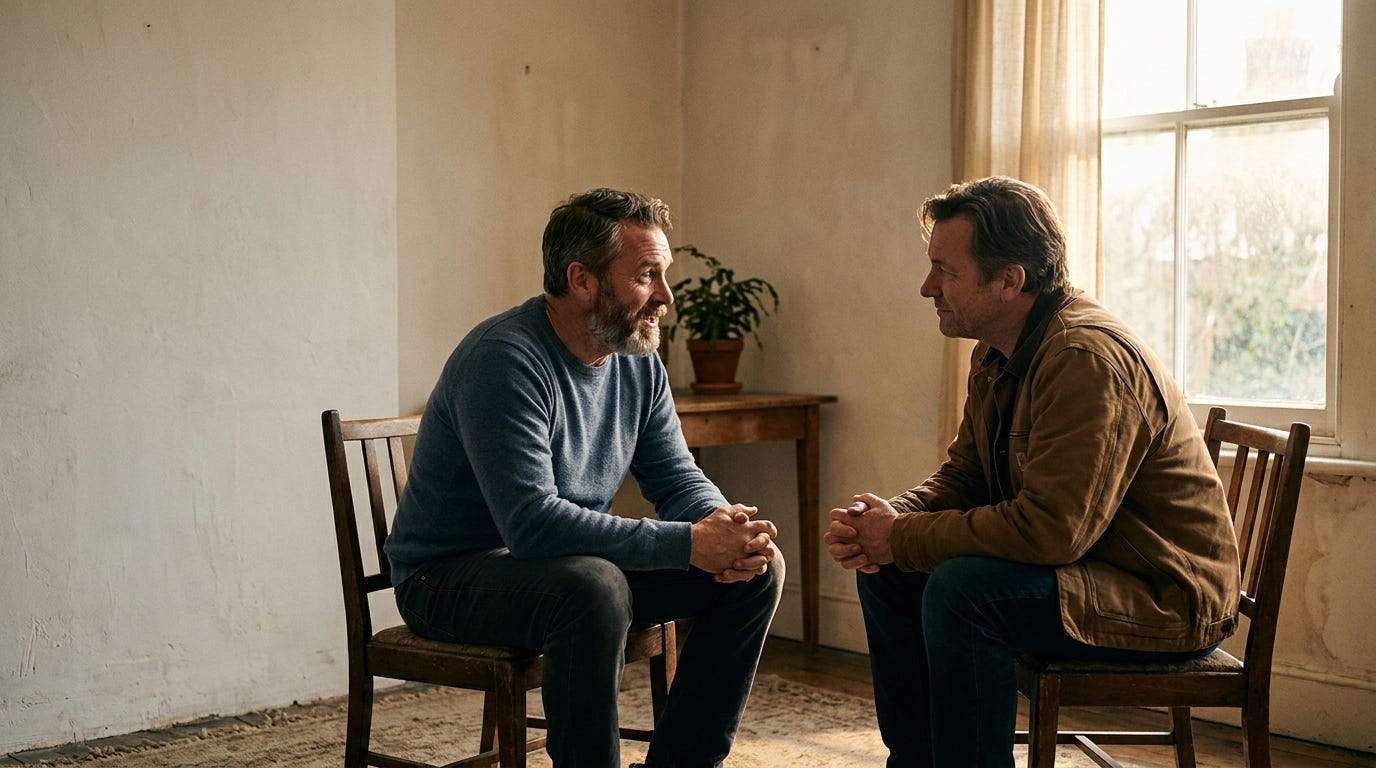
The conversation begins with masculinity, but it reaches into questions that matter to the larger work of staying human.
What happens when our identities are built on performance? What happens when usefulness becomes a substitute for belovedness, certainty becomes a refuge from vulnerability, and forgiveness becomes a way of escaping accountability? What kind of grace helps us tell the truth without either defending ourselves or collapsing into shame?
I describe myself as a recovering pastor. That recovery has involved more than reconsidering doctrine or leaving a professional role. It has meant examining the shame-based theology that settled into my body, the public identity I used to organize my worth, the hidden harm I caused, and the ways spiritual language sometimes helped me avoid what was emotionally and relationally true.
The shift toward belovedness did not convince me that harm did not matter. It made accountability possible.
If my worth is not on trial, then I can stop making every difficult conversation a trial about my worth. I can listen without demanding reassurance. I can distinguish intention from impact. I can accept consequences without turning self-condemnation into another way of centering myself.
This is where grief entered the story.
Grief did what certainty, insight, and forgiveness alone could not do. It slowed me down. It brought accountability into the body. It invited me to remain with realities I could not fix, reverse, or explain away.
In the conversation, we use the metaphor of distillation and maturation. Distillation removes what is false, but clarity alone does not create maturity. The spirit still needs time in the cask.
For me, grief became that cask.
Not because pain is automatically sacred or suffering automatically makes anyone wise. Grief becomes formative when it is tended through honesty, embodiment, relationship, accountability, community, and safe witnesses.
This is not only a conversation about becoming a better man. It is a conversation about becoming more human.
