


This is the second of ten posts revisiting essays about politics, power, and what it takes to build a more human world. After the election and with a new Democratic majority, I’m asking what we can look for, what we can push for, and where we can help something different grow.
I’m taking some time away to focus on other projects, as I shared in Atlas, the Mulch Pile, and the Foolishness of Carrying It All. In the meantime, I’m returning to these pieces to keep the conversation going about how we stay human in the midst of all of this.
Last week I reshared a post about the electoral ricochet, the way we swing from one disappointment to the next without necessarily changing the conditions that made us miserable in the first place. A new majority can create openings, but it does not automatically tell us who will benefit from them. We still have to ask who holds power, whose lives get better, and who gets left behind.
That brings me back to this piece. When we are busy seeing our neighbors as the problem, it becomes much harder to notice the arrangements that keep so many of us struggling. The parties are not identical, and the harms people face are not interchangeable. But if we want more than another turn of the pendulum, we need a solidarity that can name those differences without letting the powerful use them to keep us apart.
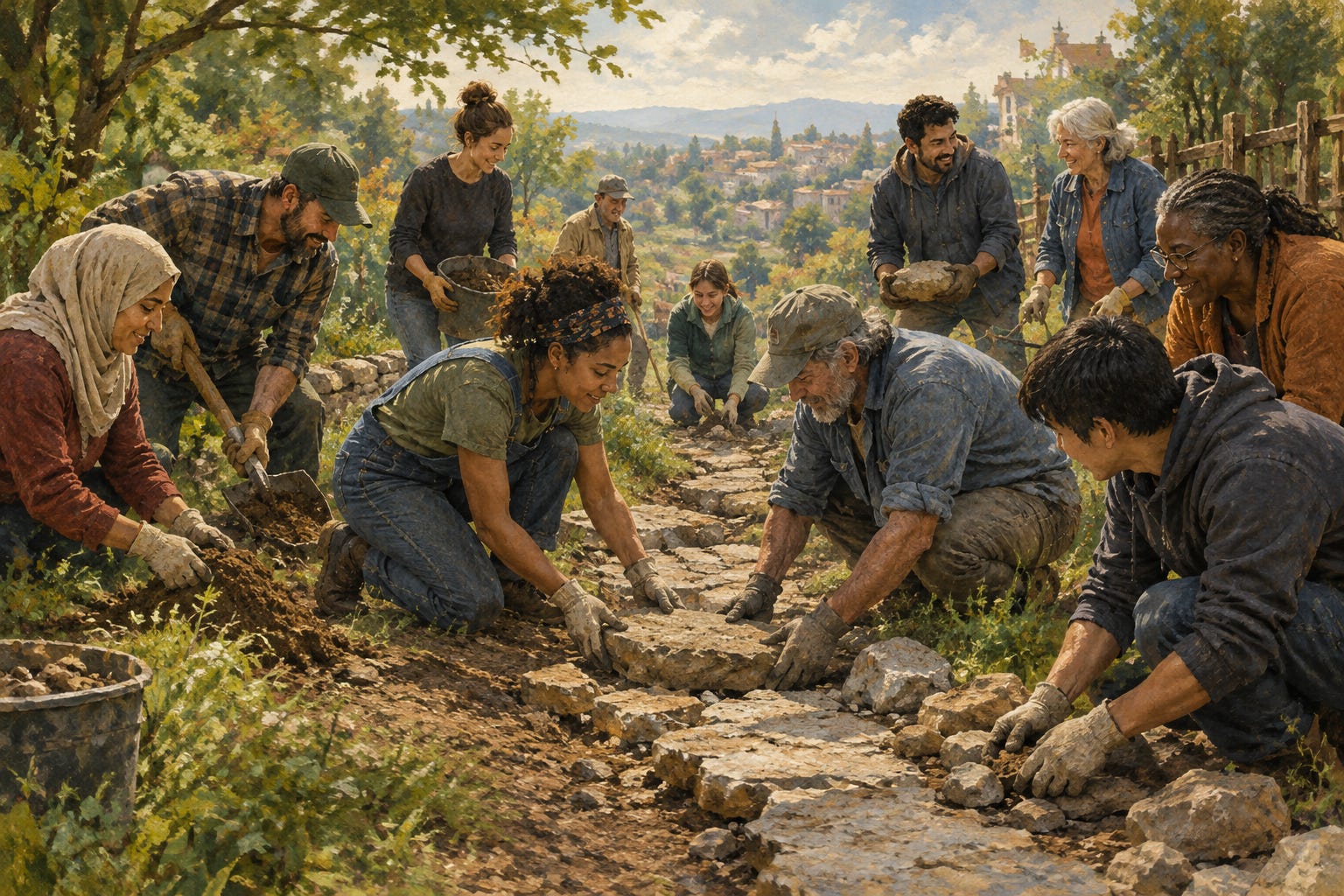
The Real Divide Isn’t Left and Right

What if the fight isn’t between Republicans and Democrats, but between those clinging to control and those just trying to survive?
Invitation: Think of one issue affecting people across political lines where you live. Who is already organizing around it, and how could you support them?
Next week: The stories that teach us to fear one another.