


Many of us were taught to begin the spiritual life by asking what is wrong with us. I want to begin somewhere else. What if our deepest truth is not depravity, failure, or distance from God, but belovedness?
In this first part of A Theology of Staying Human, I explore why I no longer believe people are broken, even when we are wounded, unwell, disconnected, or responsible for real harm. Beginning with belovedness does not make accountability less important. It may be what finally allows us to face the truth without hiding, collapsing, or turning anyone into something disposable.
However you prefer to take it in, you can watch, listen, or read. The full written reflection continues below.
Watch and Listen
The Whole Story
In last week’s We Can Stay Human I shared my conversation with Richard on the Mindful Masculinity podcast. Near the beginning of the episode, I was introduced as a pastor, which required a little explanation.
People still call me that sometimes. The work I do can certainly look pastoral. I officiate funerals, sit with grieving families, offer spiritual direction and coaching, write and speak about questions of meaning, and occasionally step into a pulpit. But I am not a parish pastor anymore. I do not officially hold that role or serve in that capacity. I sometimes describe myself as a recovering pastor, partly with humor and partly because leaving a role does not mean that everything the role formed in you disappears.
The questions remain. The language remains. The wounds and wisdom remain. Faith remains too, although it has been dismantled, examined, and reassembled differently than it once was.
With that in mine, I should note that We Can Stay Human is not an explicitly Christian publication. It is not a church newsletter, a theology classroom, or a project aimed only at people who share my beliefs. People arrive at the work of staying human through many traditions, experiences, and paths. Some find their way through Christianity. Others arrive through another faith, through psychology, grief, art, nature, political struggle, recovery, relationships, or simply the hard-earned wisdom of living.
I do not believe everyone needs to follow my path in order to encounter what is true along it.
But I also want to be honest about where this work comes from. Everything I write here is deeply informed by my faith, and my faith is rooted in the Christian tradition. The language of creation, incarnation, grace, belovedness, resurrection, Spirit, liberation, and repair shapes the way I understand what it means to be human. Even when I am not writing explicitly about theology, that framework is usually somewhere underneath the words.
In the podcast conversation, I talked about a significant transformation in the way I understood God, myself, sin, grace, and the Christian story. For much of my life, I had been formed by a theology that began with human depravity. I knew how to talk about human failure and forgiveness. I knew how to confess failure and receive absolution. But I did not yet know how to remain grounded enough to face consequences, listen to another person’s pain, grieve what could not be undone, and practice repair without making either my goodness or my worthlessness the center of the story.
The shift came through belovedness.
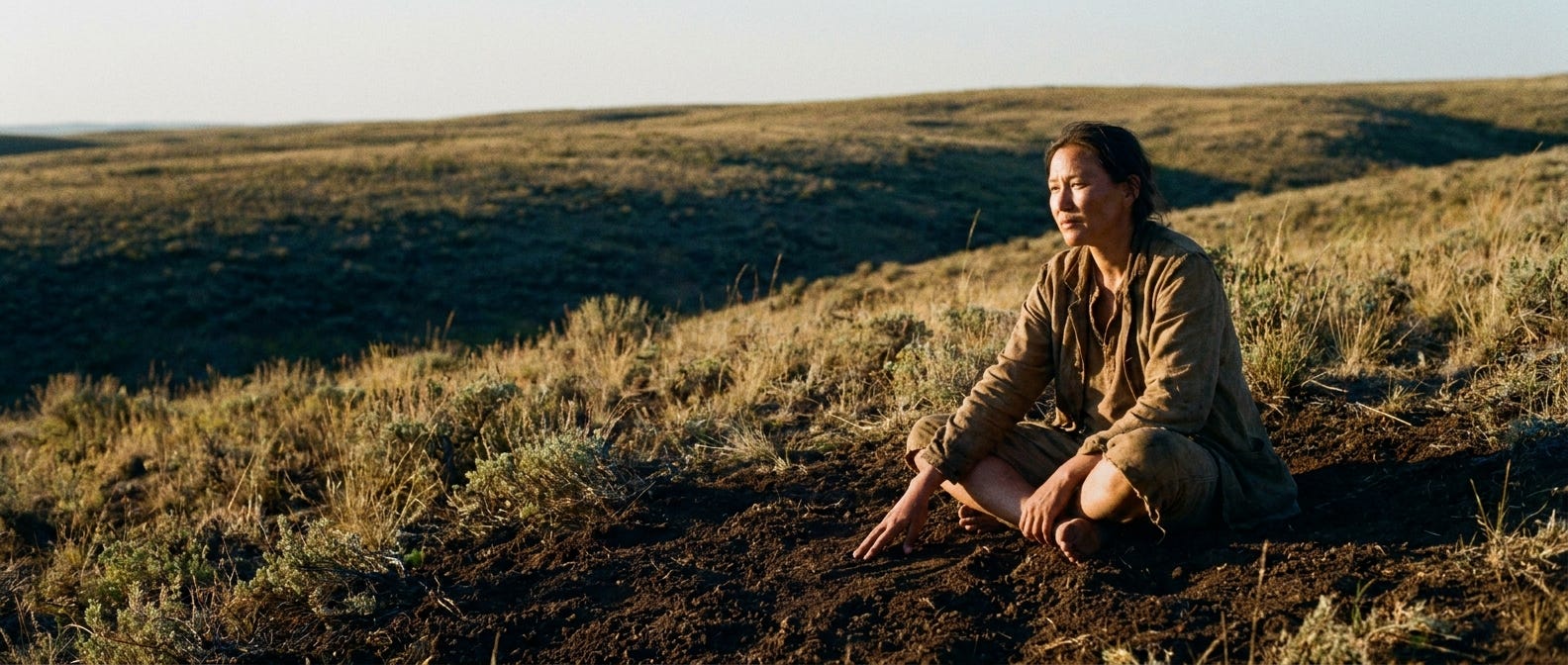
I began to understand belovedness not as a reward for getting the story right, behaving correctly, becoming useful, or proving that I had changed. Belovedness was the ground beneath the whole story. It did not convince me that harm did not matter. It made accountability possible. If my worth was not on trial, then I could stop treating every difficult truth as a verdict on whether I deserved to exist.
That discovery required more than adding a comforting idea to my old theology. It required reworking the Christian story itself. What if the story does not begin with how bad we are? What if it begins with goodness, blessing, relationship, and divine image? What if salvation is not persuading a distant God to love us, but awakening to the Love in which we already live? What if spiritual formation is not learning to escape our humanity, but becoming more fully embodied, truthful, accountable, liberated, and alive?
Those questions have shaped nearly everything I have written here.
Over the next three weeks, I want to make that underlying framework more visible. I am going to offer a theology of staying human in three movements: We come from Love. Love takes flesh. Love reweaves the world.
This series will be rooted in Christianity as I have come to understand it, but I hope it remains accessible to people who do not arrive through a Christian or even explicitly religious path. You do not have to use my language for God to recognize the danger of shame, the sacredness of the body, the need for repair, or the truth that our lives belong to one another. There are different paths into these ideas. This simply happens to be the path on which I found them.
And to explain why that discovery mattered so much, I need to begin with the problem underneath the theology I inherited.
Most Christian theology I inherited began with a problem.
Human beings were sinful. God was holy. A great distance stood between us. The rest of the story explained how that distance might be crossed, how guilt might be removed, and how a person might become acceptable to God.
It was a powerful framework. It also taught many of us to begin our spiritual lives by searching for what was wrong with us.
Before we learned to listen for love, we learned to inventory our failure. Before we learned to inhabit our bodies, we learned to distrust them. Before we learned that creation was sacred, we learned that it was temporary. Before we learned that we belonged, we learned that belonging was conditional.
What if we started somewhere else?
What if the deepest truth about reality is not punishment, scarcity, competition, or control? What if the deepest truth is Love?
This is the first claim in my theology of staying human: You are beloved. You are not broken.
You may be wounded. You may be struggling, disconnected, overwhelmed, or unwell. You may carry survival patterns that harm you and other people. You may need truth, accountability, care, repair, and transformation. None of that makes you broken. Broken is a word we use for objects that no longer work as intended. Human beings are more mysterious and resilient than that. Even when our wounds run deep, our humanity remains.
The story begins with goodness
The opening movement of Genesis does not begin with human failure. It begins with a world spoken into goodness.
Light and darkness. Water and dry land. Seed and fruit. Sun and moon. Creatures that swim, crawl, fly, and breathe. Again and again, God looks at what is becoming and calls it good.
Then humanity appears, formed in the image and likeness of God. God does not greet the first humans with suspicion. God does not hand them a performance review. God blesses them.
Before there is failure, there is blessing.
Before there is sin, there is belovedness.
Before there is hiding, there is a human body that can stand exposed without shame.
Genesis says that the man and woman were naked and not ashamed. That is more than a statement about clothing. It describes a way of being. They are seen without being managed. They are vulnerable without being threatened. They belong to God, to one another, to the earth, and to themselves.
They do not have to earn the right to exist.
Perhaps that is the original spiritual condition. Not moral perfection, but unguarded belonging. Not certainty, but trust. Not control, but participation in a world received as gift.
The theologian of mistrust
Then the serpent enters the story.
We often read Genesis 3 as a transcript of the first bad day in human history. I think it is doing something deeper. It is a sacred origin story, a story large enough to tell the truth about something that happens in every human life.
The serpent introduces mistrust.
Is God really good? Is there enough? Are you enough? Is something being withheld from you? Can you trust the life you have been given, or must you seize control of it?
The serpent tells the humans that if they eat, they will become like God. Yet Genesis has already said they bear God’s image. They are already like God. They are already blessed. They are already held inside divine delight.
The temptation is to grasp through control what has already been given as gift.
That is still one of our oldest temptations. We reach for achievement to secure worth. We curate an image to secure belonging. We accumulate money to secure safety. We dominate other people to secure control. We perform goodness to secure love.
We try to earn what can only be received.
When the humans eat, God does not change. Their bodies do not change. Their belovedness does not change. Their perception changes.
They see themselves through shame.
The body that had been a place of belonging becomes a problem to cover. Vulnerability becomes danger. Being seen becomes exposure. They hide, and then they blame.
This is what shame does. Shame does not make us more honest. It makes us better hiders. Shame tells us that if the truth is known, love will disappear. It convinces us to manage the story, shift responsibility, build a mask, and keep some part of ourselves beyond the reach of relationship.
But when God enters the garden, God does not begin with condemnation. God asks, “Where are you?”
That is not a geographic question. It is relational.
Where did you go? What story are you living inside now? Who taught you to see yourself this way? Who told you that you had to hide from Love?
God is not waiting to become loving
Many of us were given an image of God whose love and holiness seemed to be in conflict. God might love humanity, but holiness required distance. God might want to forgive, but justice required punishment. God might welcome us, but only after something changed God’s posture toward us.
I no longer believe God must be persuaded to love.
Love is not one quality God possesses alongside power, knowledge, justice, and holiness. Love is the center. Every claim we make about divine power, justice, or holiness must be consistent with Love.
If something we call divine power looks like coercion, domination, humiliation, or abuse, we should question our picture of power. If something we call divine justice requires us to ignore suffering or treat a person as disposable, we should question our picture of justice. If something we call holiness produces contempt, fear, or dehumanization, we should question our picture of holiness.
God is Love, fully and always.
I increasingly imagine God less as a distant object somewhere beyond the world and more as the sacred depth within it. God is not merely the creator of water, but something like the wetness of water. Not merely a being who occasionally enters reality, but the Beingness in whom reality lives and moves. Breath. Radiance. Source. Fire. Presence. The Love pulsing through all things and calling them toward communion.
That does not make God less personal. It makes God more intimate than our object language can hold.
God is not standing at a distance, waiting for you to become acceptable. You exist within Love.
Beloved dust
To call human beings beloved is not to pretend we are invulnerable or innocent.
We are dust. We are finite, wounded, adaptive, and capable of terrible harm. We carry inherited trauma, survival patterns, cultural conditioning, fear, desire, and the consequences of choices made by people who came before us. We fail one another. We deceive ourselves. We participate in systems that harm people, sometimes knowingly and sometimes because those systems have taught us not to see.
Belovedness does not erase any of that.
It tells us that none of it removes our humanity.
We are beloved dust. Fragile and sacred. Wounded and worthy. Responsible and still reachable. Capable of hiding, blaming, domination, and harm, but never beyond the possibility of truth, repair, and transformation.
This matters because shame makes accountability feel like annihilation. If my worth depends on appearing good, then evidence that I caused harm becomes a threat to my existence. I have to deny, minimize, explain, counterattack, or center my intentions.
Belovedness creates another possibility.
If the truth cannot erase my humanity, I can remain present when the truth arrives. I can listen without demanding reassurance. I can distinguish intention from impact. I can accept consequences. I can participate in repair.
Belovedness is not the reward we receive after we transform. It is the ground from which transformation becomes possible.
Made in the image of Love
Genesis says every human being bears the image of God.
Not every Christian. Not every citizen. Not every respectable person. Not everyone who behaves correctly, works hard, believes the right things, belongs to the right family, or votes the right way.
Every human being.
The image can be hidden beneath fear. It can be distorted by power. It can be contradicted by harmful behavior. It can be buried under years of shame and survival. But it is not revoked.
This is why dehumanization is always a theological lie.
It is a lie when religion reduces people to sinners. It is a lie when an economy reduces people to productivity. It is a lie when a political system reduces people to votes, threats, labor, collateral damage, or expendable populations. It is a lie when we reduce ourselves to our worst moment or our most impressive accomplishment.
You are not a machine built to produce. You are not a problem for God to solve. You are not a soul trapped inside a disposable body. You are not the sum of what happened to you, what you accomplished, or what you regret.
You are a human being made for communion, delight, grief, creativity, truth, repair, and love.
The beginning, not the conclusion
I know the questions this raises.
If everyone is beloved, does sin still matter? Does accountability matter? Does the cross matter? Are we simply declaring everyone good and ignoring the damage human beings do?
No.
Belovedness does not mean harm is imaginary. It means harm matters because people matter. Sin is serious because relationship is sacred. Justice matters because Love refuses to abandon those who have been wounded. Accountability matters because our lives belong to one another.
But shame cannot heal what shame has fractured.
The way out of hiding is not more terror. The way toward responsibility is not annihilation. The way toward becoming fully human begins when Love meets us where we are and tells the truth without turning us into something disposable.
Next week, I want to ask what this Love looks like when it puts on skin. Christianity’s answer to abstraction is not a better idea. It is a body. It is Jesus, the Human One, showing us both what God is like and what humanity can become.
For now, begin here:
You are beloved. You are not broken.
You may be wounded, and your wounds deserve care. You may have caused harm, and that harm deserves truth and repair. But neither what happened to you nor what you have done erases your humanity.
You were blessed before you performed.
You belonged before you believed correctly.
God is not waiting for you to become worthy of Love.
Love is already asking, “Where are you?”
If this feels less like a new theological idea and more like the ground moving beneath you, I understand. This shift first began working its way into me in 2010. It was not until 2015 that I could finally say, “I actually think this is true.” For five years, I wrestled with the possibility that some of what had organized my faith, my work, and my understanding of myself might not be true in the way I had believed.
There was freedom in that change, but there was also loss. When an old theology loosens, we do not lose only a set of ideas. We may lose certainty, belonging, language, community, vocation, and the version of ourselves built inside that world. Even a shift toward something more loving can involve real grief.
Life After Loss coaching offers a steady, non-shaming place to tend that kind of transition too. If your faith is changing and you need room to tell the truth about what you are discovering, what you are losing, and who you may be becoming, sign up for a discovery call. We can talk about whether working together would support your next chapter.
Belovedness Practices
Whether your day only allows for a 60-second reclamation, your week a one-hour resistance ritual, or you find yourself ready for a full on rebellion against a world that assaults your humanity, behind the paywall I offer you three practices that will help you bring this post to life in your everyday.
60-second Reclamation
Place a hand where you can feel your breath. Notice where your body is braced for judgment. Without forcing yourself to believe more than you can, say: “Before I change, explain, perform, or repair, I am held in Love.”
60-minute Ritual
Write two short spiritual origin stories. In the first, describe the story that begins with what is wrong with you. In the second, begin with blessing, belovedness, and divine image. Notice how each story changes the way you understand failure, responsibility, desire, and hope.
Whole-life Rebellion
Begin noticing every system that asks you to prove your humanity through productivity, purity, usefulness, citizenship, wealth, or correctness. Practice refusing the measurement without refusing responsibility. Let belovedness become the place from which you work, tell the truth, apologize, rest, resist, and love.